















E. & H.T. Anthony & Co.
Amateur Equipment or Outfit (#'s 1-8B),
Variation 2.0
(Folding Platform, Front Platform Screw)
Anthony catalog, 1887, pp. 4-10
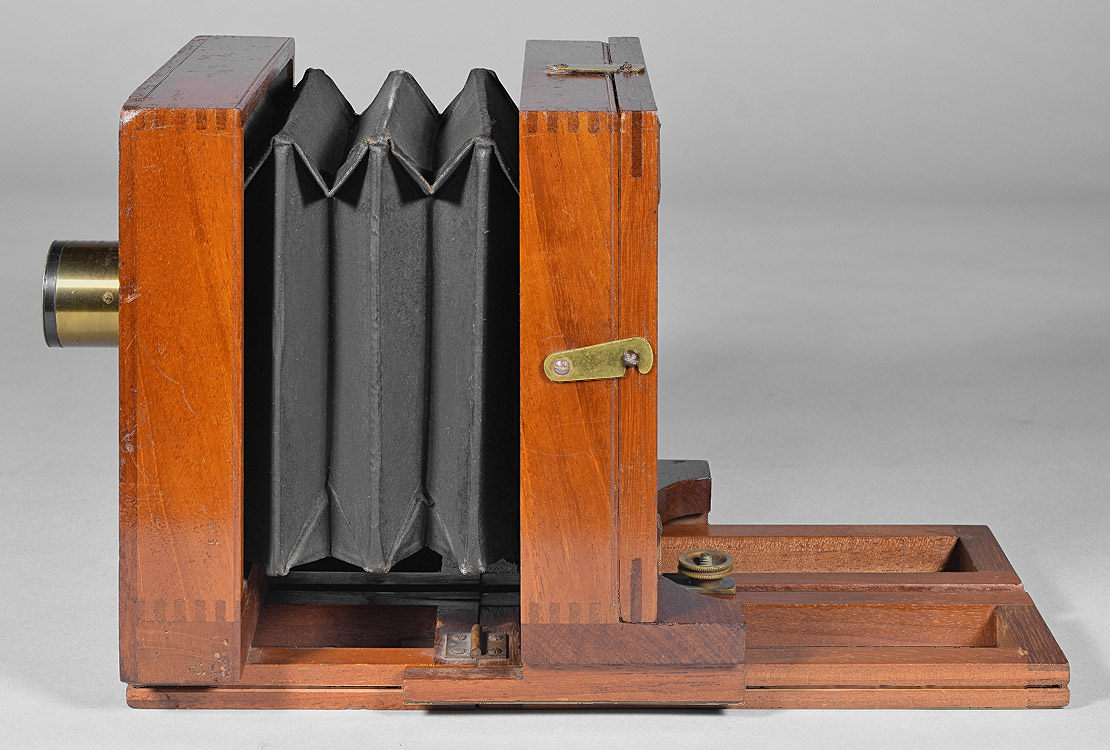
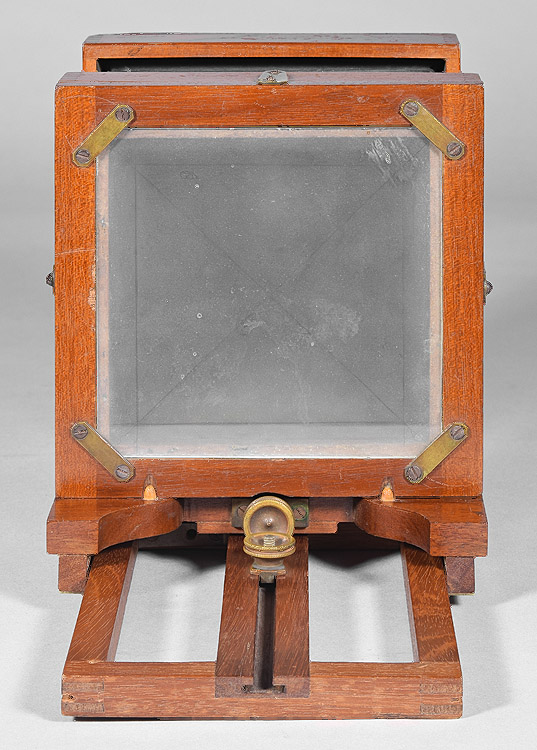
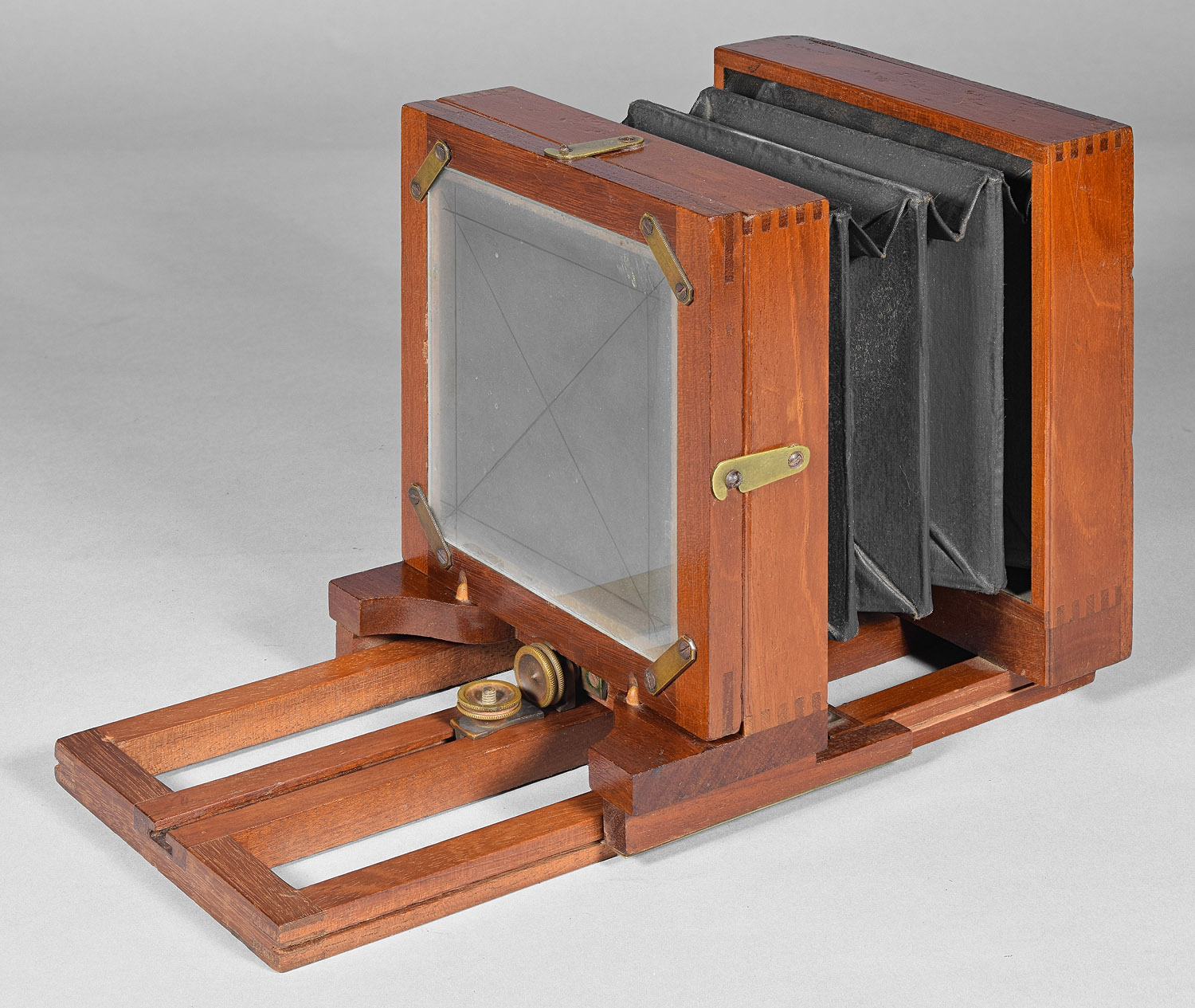
The front thumbscrew extends all the way back
to the rear platform to make it rigid with the main platform.
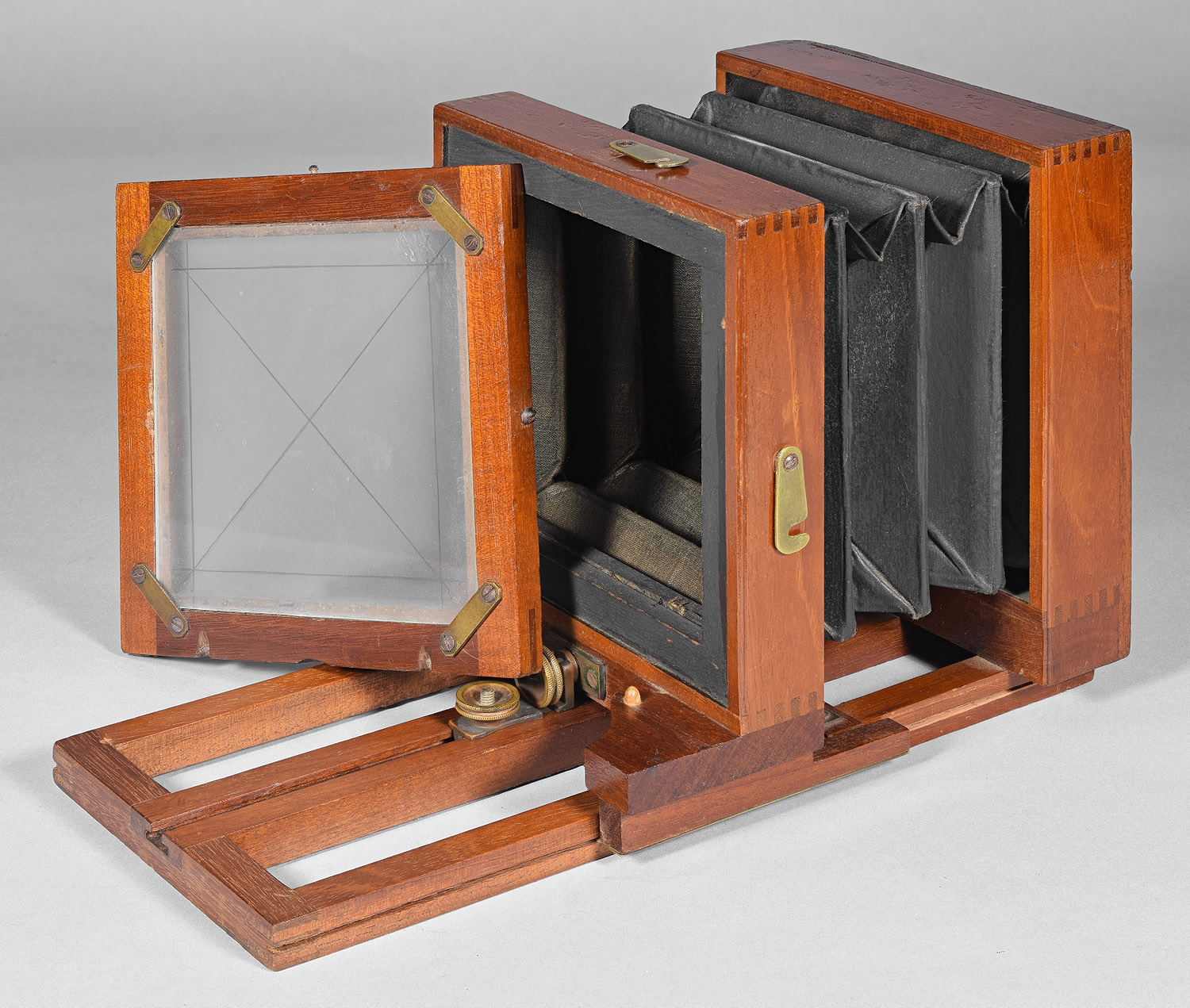
The engraving shows the thumbscrew on the left side (facing the front),
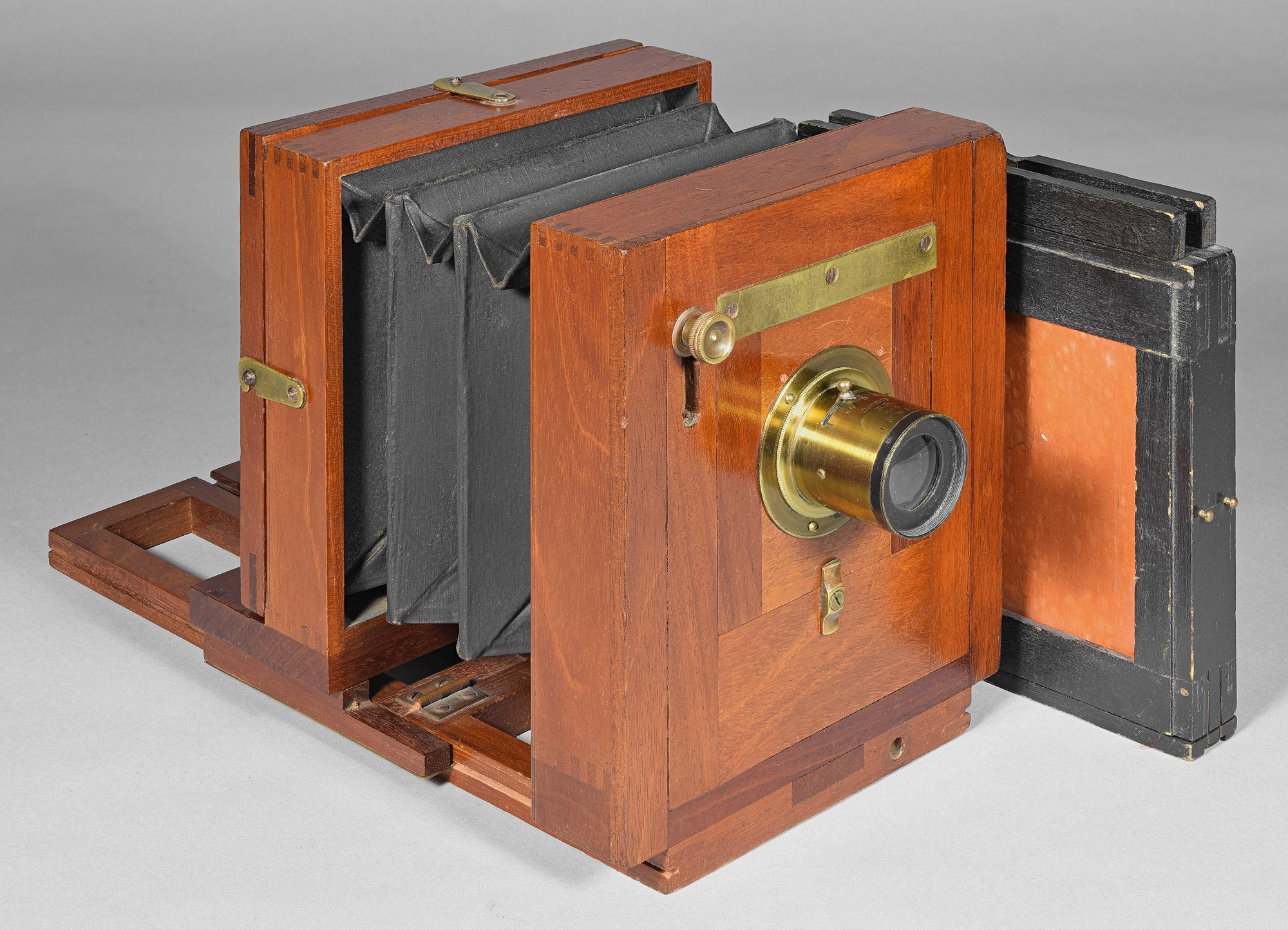
while the example below shows the hole for its missing thumbscrew on the
right side.
This engraving is used in every catalog to illustrate Equipment No. 4,
even though, at some point, Anthony started making No. 4s with short
rear thumbscrews (Variation 2.2),
a less expensive way to secure the folding platform.
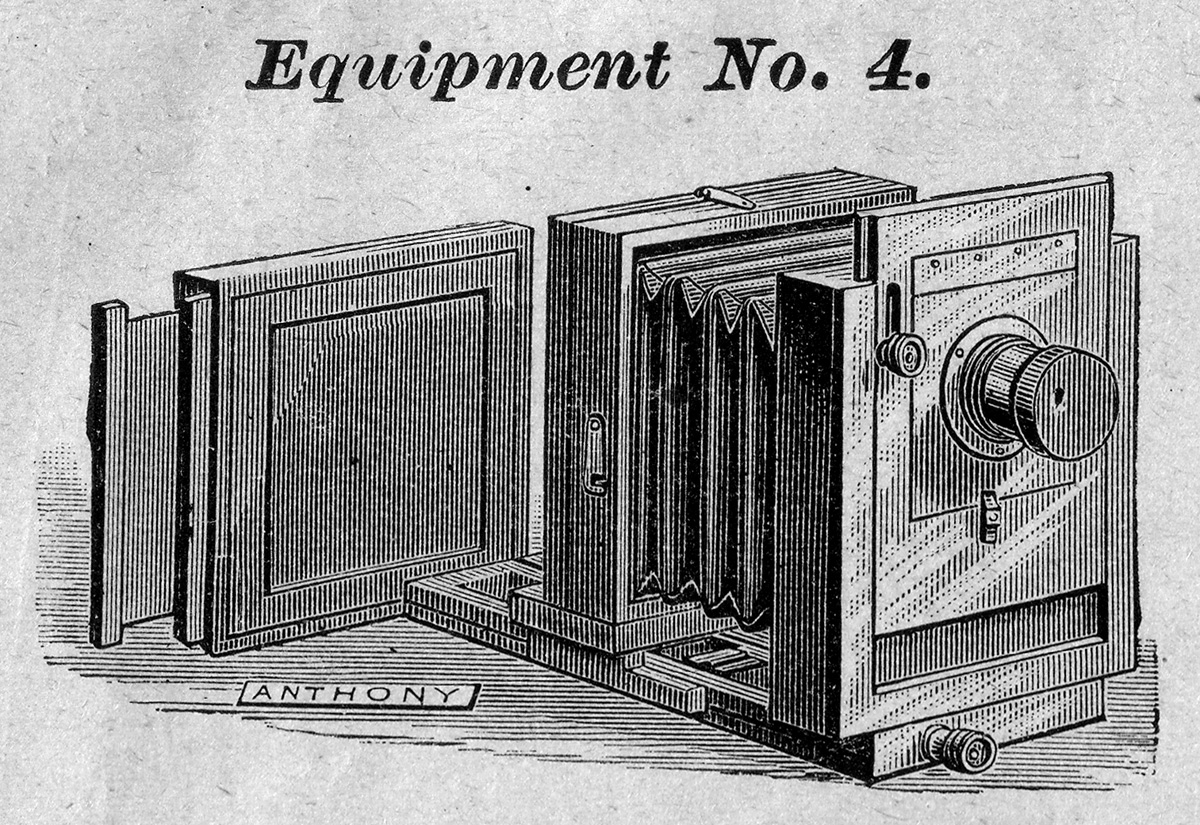
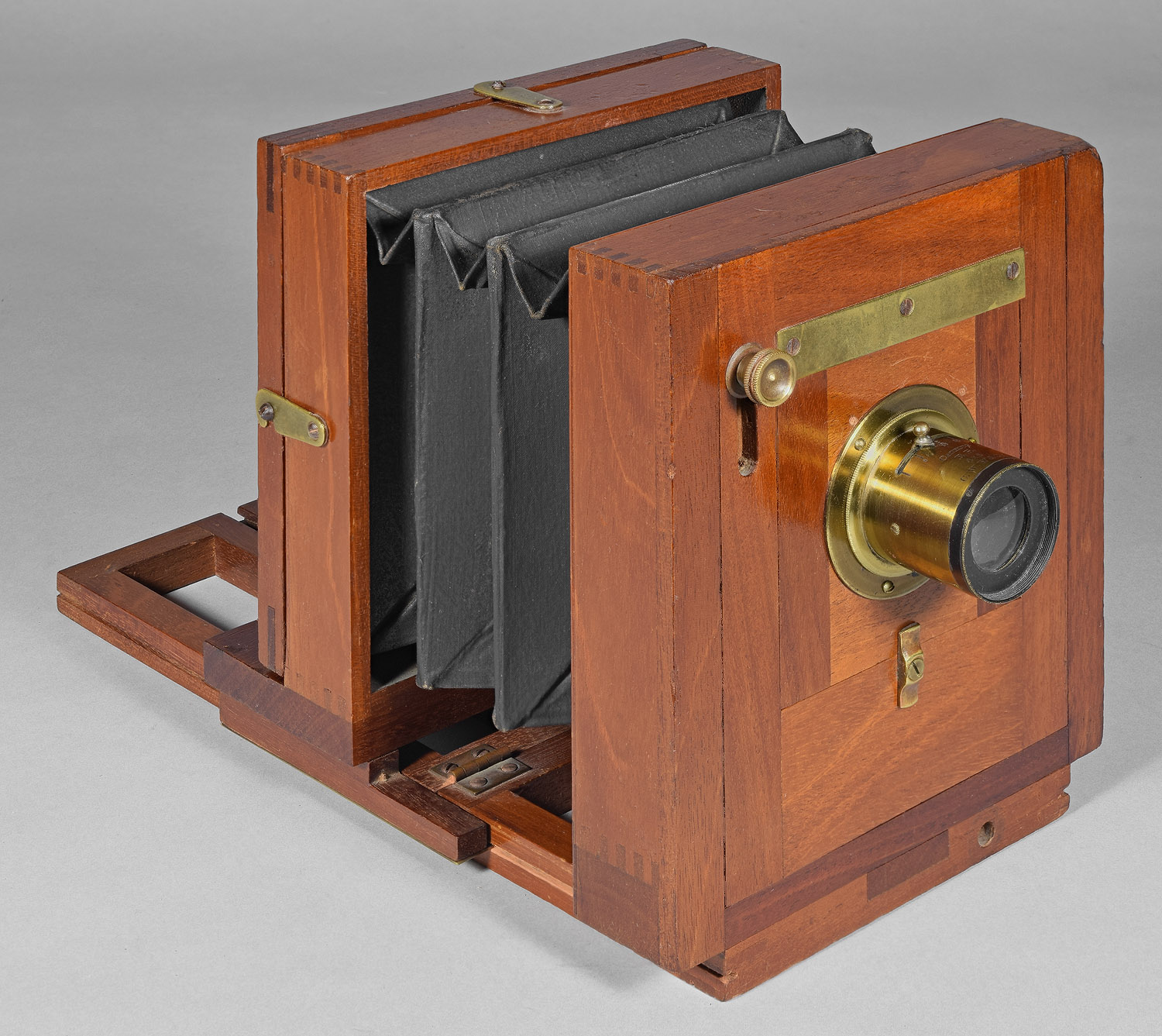
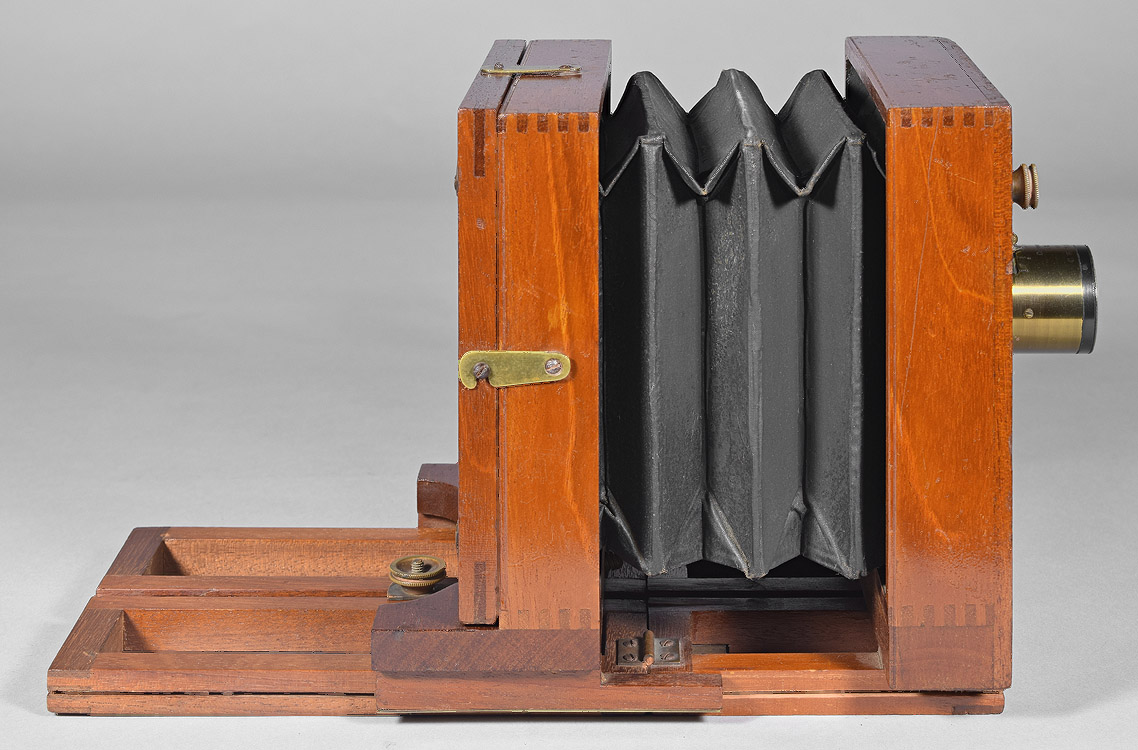
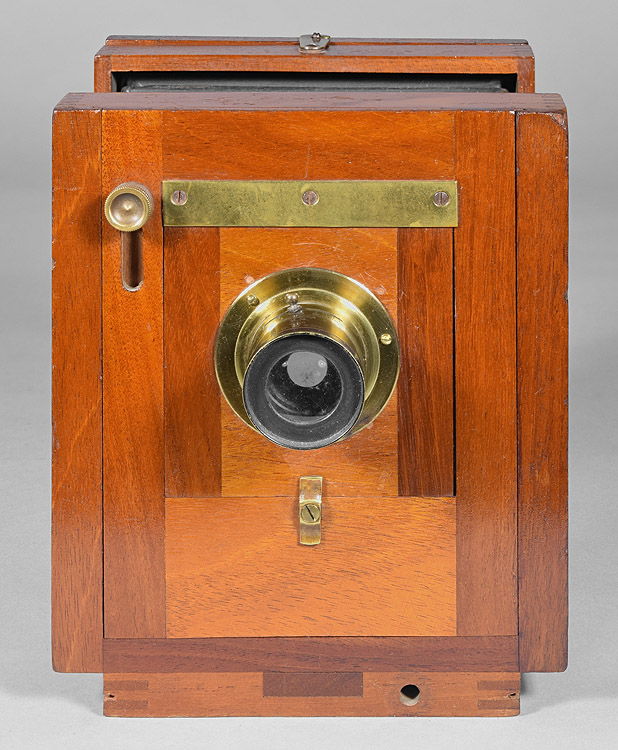
Anthony's Amateur Equipment No. 4;
4x5, mahogany, folding bed, rise but no swing,
Camera No. 4 on all three
tables below (1882-1889). Date Introduced: - ;
Years Manufactured: c.
1882 - c. 1889 From available catalogs,
the camera known as Anthony's Amateur Equipment varied in design not
only over time, but by Anthony's model number. Depending upon the
model number, the camera would be made of different wood, would be
painted or varnished, have a folding or non-folding bed, or have other
features. The tables below detail the exact configuration
according to catalogs. As a useful, easy to remember distinction,
Anthony's Amateur Equipment has been split into three variations:
Variation 1.0 includes cameras having non-folding beds,
Variation 2.0
includes cameras having folding beds made rigid via a long thumbscrew
from the front of the camera, and
Variation 2.2 includes cameras having folding beds made rigid
via a short thumbscrew from the back of the camera. Amateur Equipment (#s
1-8) - June 1882
Anthony's Amateur Equipment (#1-8) - c.1882
1 No. 1 and No. 4 have a square bellows and back,
allowing the plate holder to be positioned for horizontal or
vertical format, without the necessity of moving the camera
2 No. 3 is the same as No. 2 with the addition of a
second lens board having two lenses for stereo photographs, and
a stereo septum to separate the photos inside the bellows
Amateur Equipment (#s
1-8) - May 1885 - September 1886
Anthony's Amateur Equipment (#1-8) - c.1885
1 No. 1 and No. 4 have a square bellows and back,
allowing the plate holder to be positioned for horizontal or
vertical format, without the necessity of moving the camera
2 No. 3 is the same as No. 2 with the addition of a
second lens board having two lenses for stereo photographs, and
a stereo septum to separate the photos inside the bellows
Amateur Equipment (#s
1-8) Variation 2 - August 1887 - January 1889
Anthony's Amateur Equipment (#1-8) - c.1885
2 No. 3 is the same as No. 2 with the addition of a
second lens board having two lenses for stereo photographs, and
a stereo septum to separate the photos inside the bellows
1 No. 4 has a square bellows and back, allowing the
plate holder to be positioned for horizontal or vertical format,
without the necessity of moving the camera By 1889, the
designation Amateur Equipment was dropped, and the
No. 1, No. 1½, No. 2 and No. 3 became
the
Manhattan Camera, in cherry wood and later
mahogany. Compare the
numbers 1-8 with
American
Optical's Dry Plate Outfits #1-8 -
each number refers
to the same size plate regardless of manufacturer. An "Equipment"
usually refers to just
the camera, while an "Outfit" would include a
lens, wooden case, tripod, and possibly a dark cloth. This model may be
distinguished from the Champion model by its construction.
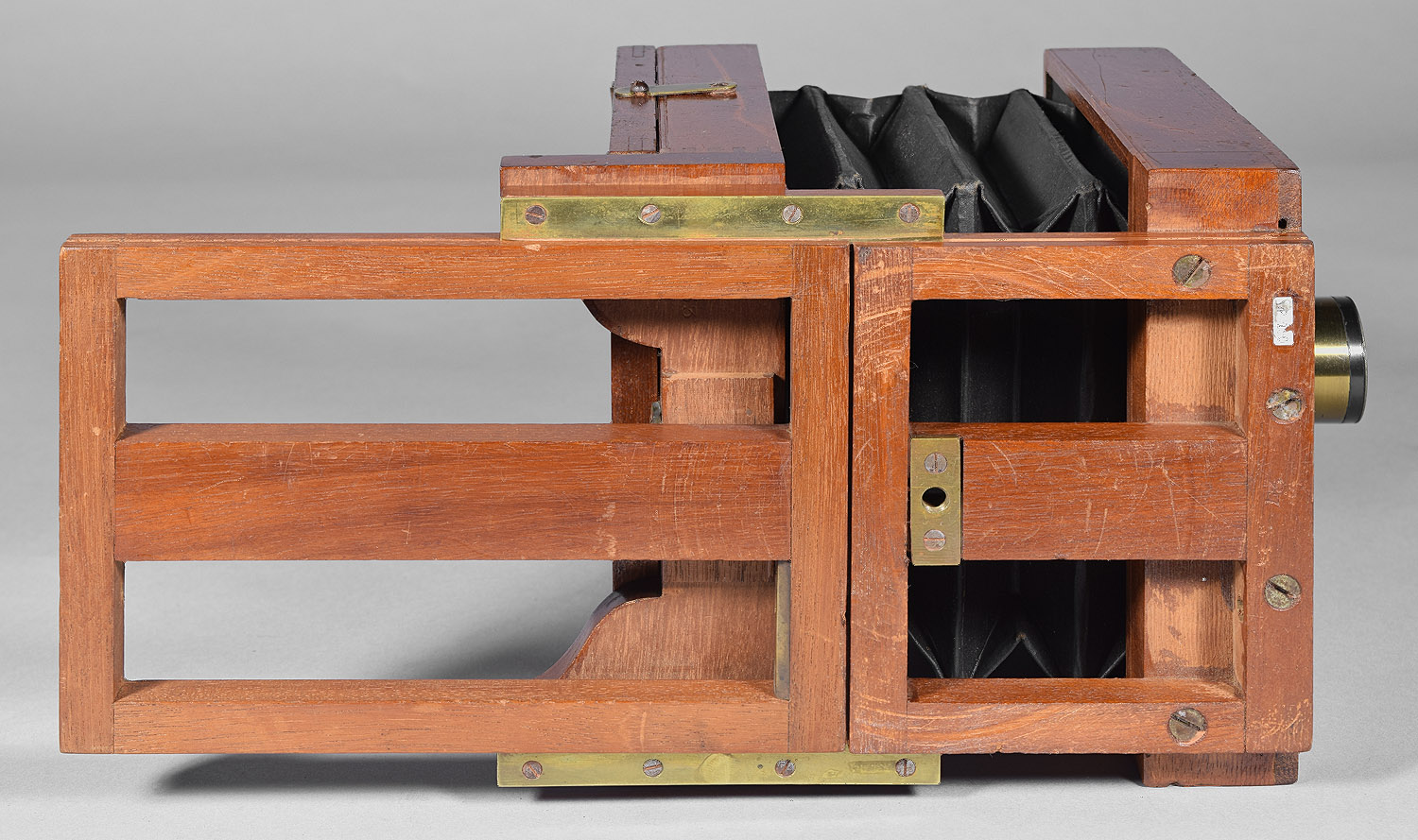
Note that, in the Amateur Equipment Cameras, both the front and
rear standards have a solid block of wood underlying the box-jointed
part. The Champion and later NPA models are
made with the box-jointed part placed directly on and overlapping the
bed, a neater but perhaps trickier construction. Rival Scovill's
cheap model
Ne Plus Ultra
also had the solid block underlayment type of construction. References:
Construction: rear
focus via push-pull; optional swing; reverse
by two tripod mounts; 3-piece lens board
Materials: optional body; cherry base
track; black fabric bellows; brass hardware
Sizes Offered: (A=No Swing; B=Single
Swing=N.P.A; #1/1A=4x5; #1½/1½B=4¼x6½; #2/2B=5x8; #4=vertical 4x5 (photos
above); #6=#5 w/ lens; #7B=6½x8½; #8B=8x10
Notes:
Anthony's
Amateur Equipment c.1882 was a simple camera, offered in a limited
variety. At this time, Amateur Equipment was the only model
in the catalog, and the name represents an almost bewildering number of
variations, best represented in chart form:
Number
Ground Glass Size
Wood
Lens Type
Mono Lens Board and Lens
Stereo Lens Board and Two Lenses
Finish
Bed Type
Rising Front
Focusing Screw
Swing
1
5x51
Plain (Basswood
or Similar)
Single Achromat
No (The Lens is
installed directly into camera body)
No
Ebonized (Black
Paint)
Non-Folding
No
No
No
1½
4¼x6½
Plain
Single Achromat
No (The Lens is
installed directly into camera body)
No
Ebonized
Non-Folding
No
No
No
2
5x8
Plain
Single Achromat
Yes
No
Ebonized
Non-Folding
No
No
No
3
5x82
Plain
Single Achromat
Yes
Yes
Ebonized
Non-Folding
No
No
No
4
5x51
Mahogany
Single Achromat
Yes
No
Varnish
Folding, with
Long Screw from the Front to Make the Bed Rigid, or Short Screw
from the Rear
Yes
Yes
No
5
5x8
Mahogany
Single Achromat
No, But Extra
Lens Board
Yes
Varnish
Folding
Yes
Yes
No
6
5x8
Mahogany
Single Achromat
with Push-Pull Focus
Yes
Yes
Varnish
Folding
Yes
Yes
No
7
6½x8½
Plain
Single Achromat
with Rack and Pinon Focus
Yes
No
Ebonized
Folding
No
Yes
No
8
8x10
Plain
Single Achromat
with Rack and Pinon Focus
Yes
No
Ebonized
Folding
No
Yes
No
By the May 1885
Anthony Catalog, other field camera models had been introduced, namely
The Patent Bijou Camera, The Novel View Camera, and the Model Stereo
Box. The Amateur Equipment was still listed, as follows throughout
1886. Changes from 1882 are marked in light blue:
Number
Ground Glass Size
Wood
Type of Lens(es)
Mono Lens Board and Lens
Stereo Lens Board and Two Lenses
Finish
Bed Type
Rising Front
Focusing Screw
Swing Back
1
5x51
Plain (Basswood
or Similar)
Single Achromat
No (The Lens is
installed directly into camera body)
No
Stain & Varnish
Non-Folding
No
No
No
1½
4¼x6½
Plain
Single Achromat
No (The Lens is
installed directly into camera body)
No
Stain & Varnish
Non-Folding
No
No
No
2
5x8
Plain
Single Achromat
Yes
No
Stain & Varnish
Non-Folding
No
No
No
2A (New Number)
5x8
Plain
Single Achromat
Yes
No
Stain & Varnish
Folding w/ Patent Hooks
No
No
No
2B (New Number)
5x8
Plain
Single Achromat
Yes
No
Stain & Varnish
Folding w/ Patent Hooks
Yes
No
Yes
3
5x82
Plain
Single Achromat
Yes
Yes
Stain & Varnish
Non-Folding
No
No
No
4
5x51
Mahogany
Single Achromat
Yes
No
Varnish
Folding, with
Long Screw from the Front to Make the Bed Rigid,
or Short Screw from the Rear
Yes
Yes
No
5
5x8
Mahogany
Single Achromat
No, But Extra
Lens Board
Yes
Varnish
Folding
Yes
Yes
No
6
5x8
Mahogany
Single Achromat
with Push-Pull Focus
Yes
Yes
Varnish
Folding
Yes
Yes
No
7
6½x8½
Cherry
Single Achromat
with Rack and Pinon Focus
Yes
No
Varnish
Folding
No
Yes
No
8
8x10
Cherry
Single Achromat
with Rack and Pinon Focus
Yes
No
Varnish
Folding
No
Yes
No
By the August 1887
Anthony Catalog, even more field camera models had been introduced than
were offered in 1885-1886. But the Amateur Equipment was still listed,
but, again, expanded to cover even more options, including more "B"
versions. All cameras are now mahogany, only the No. 4 retains a
focus screw, and the name The N.P.A. Camera is introduced to
refer to a camera having folding bed (with Patent Hooks), a rising front
and swing movement. Changes from 1885 are marked in light blue:
Number
Ground Glass Size
Wood
Type of Lens(es)
Mono Lens Board and Lens
Stereo Lens Board and Two Lenses
Finish
Bed Type
Rising Front
Focusing Screw
Swing Back
1
4x5 horizontal
Mahogany
Single Achromat
No (The Lens is
installed directly into camera body)
No
Varnish
Non-Folding
No
No
No
1B (New Number, and Also Called
The N.P.A. Camera)
4x5 horizontal
Mahogany
Single Achromat
Yes
No
Varnish
Folding
Yes
No
Yes
1½
4¼x6½
Mahogany
Single Achromat
Yes
No
Varnish
Non-Folding
No
No
No
1½B
(New Number)
4¼x6½
Mahogany
Single Achromat
Yes
No
Varnish
Folding
Yes
No
Yes
2
5x8
Mahogany
Single Achromat
Yes
No
Varnish
Non-Folding
No
No
No
2A
5x8
Mahogany
Single Achromat
Yes
No
Varnish
Folding w/
Patent Hooks
No
No
No
2B
(Also Called The N.P.A. Camera)
5x8
Mahogany
Single Achromat
with Instantaneous (Drop) Shutter
Yes
No
Varnish
Folding w/
Patent Hooks
Yes
No
Yes
3
5x82
Mahogany
Single Achromat
Yes
Yes
Varnish
Non-Folding
No
No
No
4
5x51
Mahogany
Single Achromat
Yes
No
Varnish
Folding, with
Long Screw from the Front to Make the Bed Rigid,
or Short Screw from the Rear
Yes
Yes
No
5
(Also Called The N.P.A. Camera)
5x8
Mahogany
Single Achromat
No
(No More Extra Lens Board)
Yes
French Polish
Folding
w/ Patent Hooks
Yes
No
Yes
6
5x8
Mahogany
Single Achromat
with Push-Pull Focus
Yes
Yes
French Polish
Folding
w/ Patent Hooks
Yes
No
Yes
7B (Replaces No. 7, and Also
Called The N.P.A. Camera)
6½x8½
Mahogany
Single Achromat
with Rack and Pinon Focus
Yes
No
French Polish
Folding
w/ Patent Hooks
Yes
No
Yes
8B (Replaces No. 8, and Also
Called The N.P.A. Camera)
8x10
Mahogany
Single Achromat
with Rack and Pinon Focus
Yes
No
French Polish
Folding
w/ Patent Hooks
Yes
No
Yes
Price List, Allen Brothers, Wholesale Dealers, Importers and
Manufacturers of Photographic Materials, Mats, and Picture Frames,
Allen Brothers (Detroit, MI), c.1882, pp. 35-36 (5x8" only, as E.A.
Dry Plate Outfit)
Hereafter, as Amateur Equipment or Outfit
Illustrated Catalogue of Amateur Photographic
Equipments & Materials, E. &
H.T. Anthony & Co. (New York, NY),
September 1886, pp.
5-11
Anthony's Photographic Bulletin, Vol. 17, No. 18, E. & H.T.
Anthony & Co., (New York, NY), September 25, 1886, p. 12
Walzl's Photographic Journal and the Photographer's Friend, Richard
Walzl, pub. (Baltimore, MD) undated c.1886, pp. 33-34
Illustrated Catalogue of Amateur Photographic
Equipments & Materials, E. &
H.T. Anthony & Co. (New York, NY),
August 1887, pp. 4-10
Illustrated Catalogue of Amateur Photographic
Equipments & Materials, E. &
H.T. Anthony & Co. (New York, NY),
January 1888, pp. 4-10
Illustrated Catalogue of Amateur Photographic
Equipments & Materials, E. &
H.T. Anthony & Co. (New York, NY),
January 1889, pp. 4-10